

A certified technician tests your device once a year but the threat of contamination doesn’t wait for the appointment day.
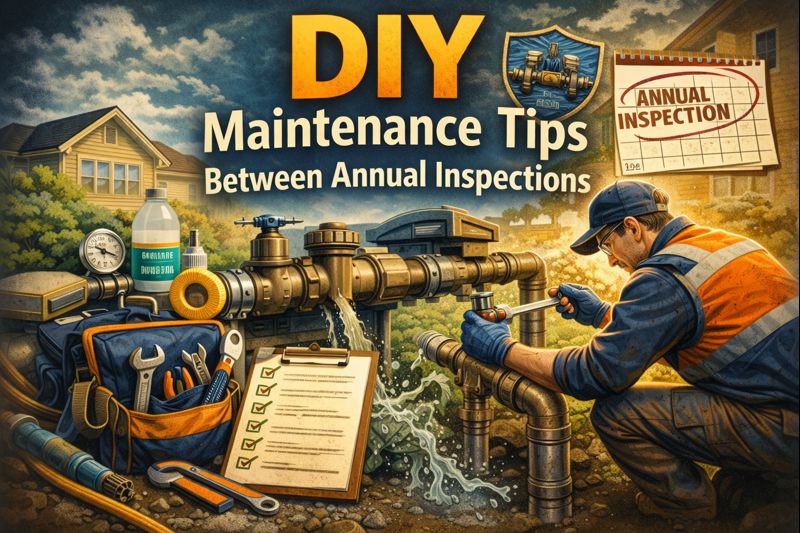
That is why a few DIY backflow maintenance steps between inspections go a long way in protecting your drinking water.
And you don’t need tools. You don’t need to get all that technical all you just need to know is what signs to look for and when something feels out of the ordinary.
As around here we like to say if the water flows then the backflow is always on the job.
And when you understand a few homeowner water safety habits then your system stays ahead of issues instead of reacting to them.
Check For Moisture Even When Everything Looks Fine
The earliest warning of a device problem is often a single drop of water where it doesn’t belong and so you want to check:
- Any dampness around the assembly.
- Soft soil is forming beneath outdoor devices.
- Rust marks near joints.
- Visible mineral buildup.
As these are all hints of early backflow issue detection and they don’t mean panic they mean it is time to keep a closer eye on things or schedule a quick check before the next storm or freeze arrives.
And for a more helpful breakdown check out the NWPD guide on How to Test Backflow Preventer: 9 Essential Steps for Safe Water Quality.
Listen Closely Because Your Plumbing Makes Noise When Something’s Wrong
A healthy backflow device runs silent and when people start hearing:
- Gurgling during water use.
- Air rushing or whistling inside pipes.
- Sudden changes in pressure mid flow.
- Tapping or bumping sounds from the assembly.
Well that is your system telling you that it is struggling.
Because any change in sound can signal a pressure shift related to cross connection protection at home as pressure issues are one of the fastest ways water contamination sneaks in.
Take A Look After Every Big Freeze Or Sudden Weather Swing
Winter is tough on assemblies because the internal parts contract, rubber seals stiffen and old valves can crack without warning.
So after any big cold snap take a minute to:
- Remove any ice that has built up on the exterior surface.
- Checking for any water stains or drippings after thawing.
- Make sure the insulation sleeves don’t shift.
As this is one of the simplest inspection backflow care actions you can do and it is one of the most valuable.
Plus if you really want to understand why winter is a prime time for plumbing stress? Then here is a helpful guide from Antons Plumbing that discusses everything you need to know about the harshness of winter.
A Quick Cleaning Goes A Long Way
Outdoor assemblies collect dust, dirt, grass clippings, bugs and lawn chemicals all of which can interfere with proper operation.
So make sure that after every couple of months give it a quick:
- Wipe it all clean and shiny duty with a dry cloth that isn’t dirty.
- Making sure to remove any kind of webs or debris that starts to sit around the valve.
- And check that the protective covers are still firm and snug in their rightful places.
Because keeping things clean supports safe plumbing performance checks and reduces wear from exposure.
Know When Water Behavior Isn’t Normal
Your fixtures will tell you when the pressure isn’t right so pay attention when the:
- Faucets sputter before water flows.
- The toilet tank fills more slowly than usual.
- Irrigation zones lose pressure randomly.
- Water suddenly tastes or smells different.
Those are the moments when Backflow Joe’s prevention guidance becomes worthy of a phone call because strange water is never just a coincidence.
Outside? Give Your Device Some Space
If your device is outdoors especially near the landscaping then always avoid:
- Mulch piled against the valve.
- Shrubs are crowding the enclosure.
- Lawn equipment is bumping the assembly.
- Pets are digging around the base.
Because accessibility matters and if your technician can’t reach the device easily then annual testing and any urgent repairs become harder than they need to be.
That is why these small local service device upkeep tips really matter between visits.
The Most Important Part Trust Your Instincts
You don’t need to be a plumber to know when something feels wrong as most contamination issues we have found started with a homeowner saying.
Well it probably isn’t anything serious but. And almost every time they were right to call.
So if you see, hear or smell anything unusual then that is your system asking for help and fast attention prevents expensive repairs later.
And Backflow Joe’s is always here when something feels off because a quick look from our team is cheaper than fixing a full scale water contamination problem after it spreads.
Conclusion: A Little Attention Now Can Save You Big Trouble Later
Your backflow device works quietly every single day to protect your water supply. That is why giving it care and doing early backflow issue detection, keeping up with homeowner water safety habits and leaning on Backflow Joe’s prevention guidance when something doesn’t seem normal is how you make sure that protection never slips.
So if you would rather not second guess the signs then Backflow Joe’s can make a quick stop, confirm everything is working and set you up for a worry free year because when it comes to clean water the sooner is always the safer option.