

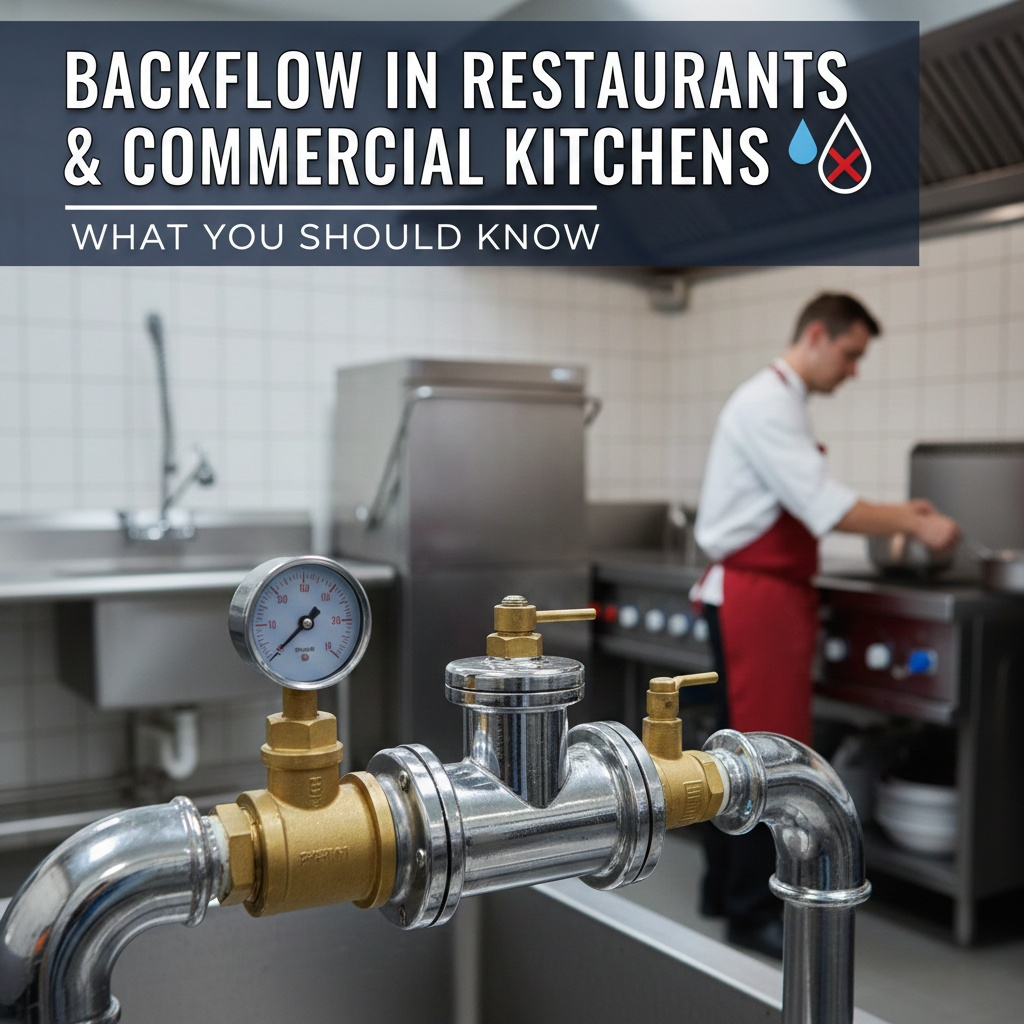
Because for one specific vital reason and that is that they don’t just use more water in fact they just use it differently.
Because with their dishwashers, prep sinks, ice machines, mop basins, soda systems and grease traps all have commercial kitchen plumbing risks that are significantly higher than in offices or other retail spaces.
And so that is why restaurant backflow prevention isn’t optional like ever because it is one of the most closely scrutinized elements during inspections and for good reason.
The Face Of The Real Backflow Threat In Commercial Kitchens
Backflow happens when contaminated water reverses direction and enters the clean supply and in places like restaurants that contamination can include:
- Grease waste.
- Food particles.
- Cleaning chemicals.
- Carbonated beverage lines.
- Standing wastewater.
All these cross connection hazards in kitchens are exactly what inspectors look for because one failure can compromise public health fast.
And to see just good perks there are in preventing this disaster take a look at this guide from Wade Roberts.
Grease Traps And Dishwashers Cause More Issues Than You Think
One of the most overlooked problems we see is grease trap backflow issues tied to improper drainage or missing backflow assemblies.
Where high temperatures in commercial dishwashers can also create pressure differentials that pull contaminated water backward if proper protection isn’t installed or maintained correctly.
And these aren’t theoretical risks. They are common violations during surprise inspections.
What Health Departments Actually Expect?
Most restaurant owners assume passing a plumbing inspection is enough. No it isn’t.
Because the Health Department backflow requirements usually include:
- Approved backflow prevention devices.
- Annual certified testing.
- Proper documentation on file.
- Immediate repair if a device fails.
Miss any one of these and you are exposed to fines, re inspections or worse shutdowns and that is why this Pacific Backflow article clearly points out why you should have your backflow tested by a proper professional as they can get the problems to go away quickly.
Why Restaurants Fail Backflow Inspections?
From our decades of work in the field the failures usually come down to three things:
- Devices were never installed correctly.
- Testing was skipped or delayed.
- Records weren’t submitted properly.
That is why food service backflow compliance requires proactive testing and not those last minute scrambling.
How Does Backflow Joe’s Handle Restaurant Systems Differently?
To us restaurants aren’t residential properties and they shouldn’t be treated like them.
That is why Backflow Joe’s restaurant testing process accounts for:
- Peak water usage times.
- Equipment specific pressure demands.
- Multiple cross connection points.
- Health department documentation standards.
Because this approach reduces failures and keeps inspections predictable and if you want then you can see how our certified testing works here.
Timing Matters More Than Owners Realize
Waiting until inspection season is risky because restaurants operate all year round and systems degrade quietly.
And so scheduling commercial backflow testing services early helps:
- Catch failing devices before inspections.
- Avoid emergency repairs during peak hours.
- Maintain uninterrupted kitchen operations.
So if your system fails on inspection day then it is already too late.
Why Do Inspectors Prefer Certified Specialists?
Health departments trust specialists who understand food service environments.
And for this exact reason organizations like the American Water Works Association emphasize that you do proper testing for high risk facilities from well trained experts.
Because certified testers who specialize in commercial kitchens reduce confusion, speed approvals and prevent repeat violations.
What Restaurant Owners Should Be Asking?
If you own or manage a restaurant then ask yourself:
- When was our last certified backflow test?
- Are all high risk fixtures protected?
- Do we have documentation ready today?
And if any answer is unclear to you then that is a liability and so this is where working with experienced professionals matters.
Conclusion: Backflow Compliance Protects More Than Your License
In restaurants the backflow isn’t just a plumbing issue. It is a food safety issue, a legal issue and a reputation issue.
And so proper restaurant backflow prevention protects your customers, your staff and your business from avoidable shutdowns and violations.
So if you want inspections handled by professionals who understand commercial kitchens inside and out then hurry up and book your seasonal backflow service with Backflow Joe’s because we can help your restaurant stay compliant without disrupting service.