
No doubt that restaurants are built around cleanliness with stainless steel surfaces. Sanitized prep stations. Strict health codes.
But here is the real deal behind those walls and under the floors the water systems are often doing something owners never think about which is quietly creating backflow risks.
Because in food businesses the plumbing systems work harder than almost any other commercial space.
With high volume water use, heat changes, grease systems, dishwashers, soda machines and mop sinks so yeah all of it increases the chance of pressure shifts and cross connections.
That is why restaurant backflow risks are taken so seriously by health departments.
Where backflow doesn’t just threaten water quality. It also threatens your license, your reputation and your very ability to stay open.
Why Are Restaurants A High Risk By Design?
Well because most homes have a few plumbing connections. While the restaurants have dozens.
And many of them connect directly to equipment that can contaminate water if the pressure reverses.
That is why common high risk connections include:
- Those hard working commercial dishwashers.
- Yeah those refreshing ice machines and beverage dispensers.
- Mop sinks and janitorial stations.
- Grease traps and floor drains.
- Fire suppression systems.
- Outdoor hose bibs.
Every one of these creates the potential for cross connection hazards in kitchens. And so if backflow occurs then contaminated water doesn’t stop at one fixture it can move through the entire potable system.
That is why inspectors don’t recommend protection. In fact they require it.
How Backflow Can Shut a Restaurant Down Overnight
Backflow incidents in food businesses aren’t theoretical as they happen fast and the consequences escalate just as quickly like a race car.
And so when contaminated water is suspected the health departments can issue immediate closures.
In many cases the reopening requires documented backflow testing, system flushing and compliance verification. Where lost revenue also piles up while inspections are pending.
Plus according to Service Pro Plumbing contaminated water systems are a known contributor to foodborne illness outbreaks when plumbing safeguards fail.
That is why commercial kitchen water contamination is treated as a serious public health concern.
Because one failed device can undo years of hard earned trust.
The Role Of Backflow Prevention Devices In Food Service
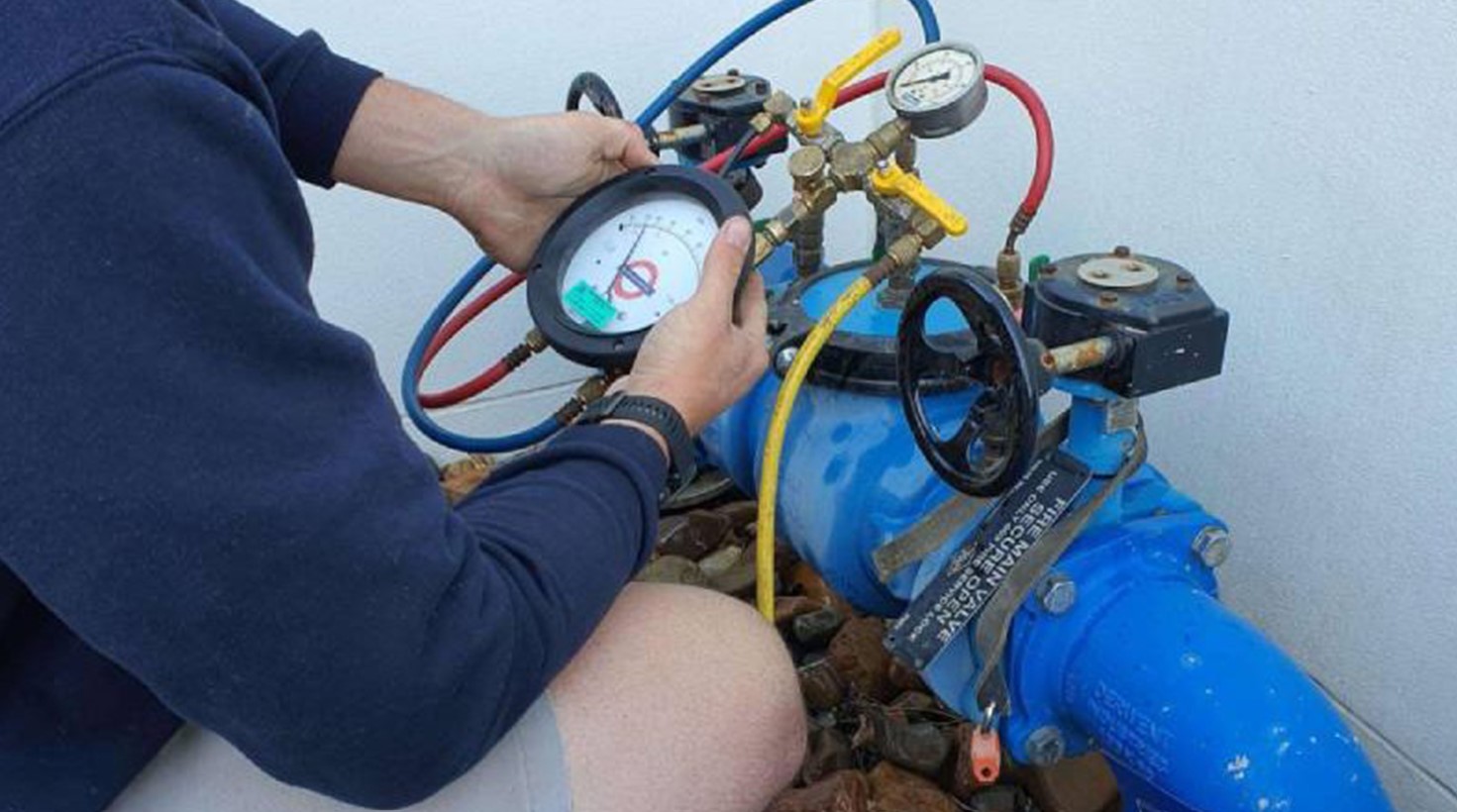
Backflow preventers are mechanical safeguards installed at specific risk points. Their job is simply to stop water from flowing backward. But in restaurants that simplicity doesn’t mean optional.
And so local codes usually require:
- Proper device type for each application.
- Professional installation.
- Annual certified testing.
- Documentation on file for inspections.
This is where many restaurants slip up where devices get installed during construction and forgotten with no testing. No paperwork. And no awareness until an inspector asks for the proof.
That is why backflow prevention for food businesses isn’t just about equipment it is about process.
So if you are unsure what devices your facility should have then our guide on commercial backflow testing explains how restaurants are evaluated and what inspectors look for.
What Inspectors Actually Check And Why It Matters A Lot?
Health inspectors don’t just glance at a device and move on in fact they verify things like:
- Device placement and accessibility.
- Current test certification.
- Correct application for each fixture.
- Absence of unprotected cross-connections.
And so failing any of these can trigger violations. Plus repeated failures can lead to fines or temporary closures.
So yeah this is where restaurant backflow compliance separates prepared operators from reactive ones.
Plus Adamjee Dura Built emphasizes that proper backflow control is essential to maintaining safe public water systems especially in commercial facilities.
The Hidden Cost Of Ignoring Backflow Testing
Skipping annual testing might save you a small service fee in the short term. But in the long term it is one of the most expensive risks a restaurant can take.
Where the potential fallout includes:
- Emergency testing fees.
- Business interruption losses.
- Equipment sanitation or replacement.
- Legal exposure if customers are affected.
So if you manage multiple locations then these risk multiplies quickly.
That is why many restaurant owners schedule testing proactively through a dedicated backflow testing service rather than waiting for an inspection trigger.
Smart Restaurants Treat Backflow Like Food Safety
You know that the most successful food businesses don’t see backflow testing as a checkbox.
As a matter of fact they treat it the same way they treat refrigeration logs or sanitation schedules you know as a routine protection.
Because those sneaky backflow issues don’t announce themselves. Where there is no alarm. No smell. No visible leak.
And by the time water quality is questioned then the damage is already done and so that is why planning ahead always beats reaction every single time.
So Come On Protect Your Water Before It Becomes A Problem
And so restaurants live and die by trust. Where the customers trust that what they eat and drink is safe.
That is why backflow protection is part of honoring that trust even if it happens behind the scenes.
So if your restaurant hasn’t been tested recently or if you are unsure whether your system meets current code then now is the time to act.
Book your seasonal backflow service with Backflow Joe’s. Because we help food businesses stay compliant, avoid shutdowns and keep clean water flowing where it belongs forward and not backward.